Sharing a home with a dog and a cat can make feeding time surprisingly complicated. One pet may eat slowly, while the other finishes quickly and investigates every bowl. This raises a practical question: do smart feeders work for dogs and cats together?
Dr. Mikel Delgado, a certified cat behavior consultant and applied animal behaviorist, often reminds owners, “Cats are not small dogs.” Her point matters here. Dogs and cats have different eating patterns, body sizes, nutritional needs, and food-seeking behaviors. A smart feeder can release measured portions, follow schedules, and record eating activity. Some models also use microchip or collar recognition, helping prevent a food-motivated dog from stealing a cat’s meal.
Still, technology is not a complete solution. A large dog may damage a lightweight feeder. A nervous cat may avoid a noisy device. Bluetooth failures, weak batteries, or poor recognition can also interrupt the routine. Small details matter. Test the feeder beside the current bowls first. Watch both pets for several days.
That takes patience.
In my experience, the most reliable setup combines feeder controls with physical separation. A cat may eat on a raised shelf, while the dog eats behind a pet gate. Owners should compare portion records with actual leftovers, not trust the app blindly. Smart feeders can support safer routines, but they cannot replace observation, veterinary guidance, or individual judgment. The answer is usually yes, with an important qualification: the device must match both animals, not just the household’s schedule.
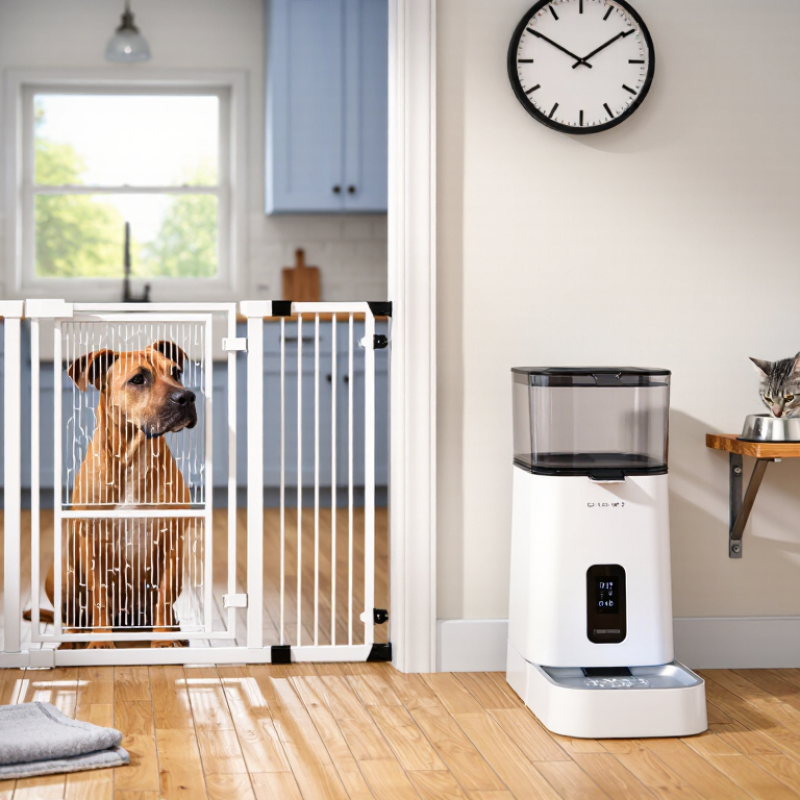
Smart feeders make feeding more measurable for homes with both dogs and cats. They can release scheduled portions, record meals, and limit casual grazing. A cat might receive four small servings, while a dog receives two controlled meals. That difference can reduce bowl competition and unnoticed overeating.
APPA’s 2023–2024 National Pet Owners Survey counted about 65.1 million U.S. dog-owning households and 46.5 million cat-owning households. Many homes therefore manage different species under one roof. Smart feeders support this routine, but only when each pet has reliable access. A feeder with identification controls can recognize individual animals. Without that feature, a clever dog may still eat the cat’s food. Technology helps. Supervision still matters.
The WSAVA Global Nutrition Guidelines emphasize appropriate portions, body-condition checks, and regular dietary review. A feeder can improve portion accuracy, especially when a household uses a kitchen scale during setup. It cannot diagnose illness or replace veterinary advice. Owners should inspect the bowl, confirm dispensing, and watch for skipped meals. A jammed mechanism can create a quiet problem. I would also test the schedule during travel before trusting it overnight. Not perfectly. Cats may hide. Dogs may guard. The device records food delivery, not always food consumption. APPA reported U.S. pet industry spending of $152 billion in 2024, showing strong investment in pet care, though spending alone does not prove every smart feature is useful.
A shared smart feeder can help in some homes, but it cannot erase the differences between dogs and cats. Dogs often do well with measured meals at fixed times. Many cats prefer several small meals throughout the day. Cats also need food that supplies essential animal-based nutrients, while dogs can usually eat a more flexible, species-appropriate diet. Their bowls should not be treated as interchangeable.
A reliable setup gives each pet separate access. Identification tags or collar sensors may open the correct compartment for one animal. This can stop a dog from stealing a cat’s calorie-dense food. It can also protect a slower eater from competition. Check portion settings with a veterinarian, especially when a pet is overweight, elderly, or managing kidney, digestive, or urinary concerns. Fresh water still matters.
Technology helps, but it is not supervision. A determined dog may nudge the feeder, and a timid cat may avoid it after a loud motor sound. I once assumed a timed lid solved everything. It did not. Watching actual eating habits remains necessary. Notice uneaten food, sudden hunger, vomiting, or weight changes. Some cats need wet food for hydration, which many automated devices handle poorly. A mixed routine may work better than forcing both animals into one schedule.
Smart feeders can support dogs and cats together, but only when designed around individual access. RFID or microchip recognition opens the lid for the assigned pet, reducing food stealing. A collar tag can help, but some cats dislike wearing one. Test the fit before changing feeding routines. Portion programming gives each animal measured servings, while scheduled releases suit a cat’s grazing habits and a dog’s enthusiasm. Small portions matter.
Useful multi-pet features go beyond recognition. A sealed hopper keeps kibble dry and limits curious paws. Backup battery support helps during brief power cuts. Low-food and missed-meal alerts can reveal problems early. Slow-feed trays may reduce gulping, although a determined dog can still push or tip a lightweight unit. Stable, washable parts often matter more than a crowded app.
Placement needs careful observation. Put the cat’s feeder on a raised, quiet surface if the cat can reach it safely. Keep the dog’s unit away from walls or furniture that provide leverage. Observe meals for several days. Recognition can fail when pets crowd the sensor, and portion sizes may vary with kibble shape. One overlooked issue is social stress: a timid cat may avoid a feeder near a noisy dog. Adjust access rules or location, and ask a veterinarian about unexpected weight changes.
Shared smart feeding sounds convenient for homes with both dogs and cats. In practice, shared feeding creates several daily challenges. A large dog may push past a cat before the lid closes. A timid cat may then eat too little. Some feeders identify pets with tags or microchips, but recognition can fail when animals crowd the bowl.
Portion control is another concern. Dogs often finish quickly, while cats may return for small meals. One household I observed had a feeder schedule that suited the cat but frustrated the dog. The dog barked beside the unit and disturbed every meal. The owner eventually moved the cat’s feeder to a quiet, elevated area. That small change worked better than changing the feeding schedule.
Technology also needs supervision. Wi-Fi interruptions, low batteries, or jammed food can delay a meal. Dry food may bridge the dispenser opening, especially in humid rooms. Test each portion with a measuring cup for several days. Check leftovers, weight changes, and unusual guarding behavior. A pet should not lose access because a device misread an ID. It sounds obvious.
Mixed feeding can be harder. Cats may need different nutrients than dogs, and some dogs may steal prescription diets. Separate rooms, timed access, or physical barriers can help. Still, no setup is perfect. Pets learn routines faster than owners expect, and sometimes they outsmart the feeder. Regular observation remains essential, even when the app reports everything is normal.
Typical daily meal-frequency guidance highlights why one shared feeding schedule may not suit both species.
Adult dogs are commonly fed once or twice daily, while cats often benefit from several smaller meals. A shared smart feeder may therefore require separate portions, schedules, or access controls to reduce overeating, food guarding, and missed meals. Individual age, health, and veterinary recommendations should always take priority.
Do Smart Feeders Work for Dogs and Cats Together?
How to Choose and Use a Smart Feeder Safely
A smart feeder can help in a home with both dogs and cats, but one device rarely suits every pet. Dogs may push, chew, or empty a shared bowl quickly. Cats often need quieter access and smaller portions. Choose a feeder with individual identification, a stable base, and a lid that closes securely. Microchip or collar-based access can prevent the wrong animal from eating. It is not perfect, though. Some pets learn to follow closely behind another pet.
Measure each animal’s daily food with a kitchen scale. Do not trust the feeder’s portion setting without checking it. Run three test meals while you watch. Look for stuck kibble, delayed openings, or a frightened cat hiding nearby. Place the feeder against a wall, away from water spills and direct sunlight. A non-slip mat can reduce noise and movement. Keep dogs several feet away during the cat’s feeding time.
Use separate feeding areas when diets differ, especially for overweight pets or animals with medical needs. Clean the bowl and food path regularly, since old crumbs can attract insects and grow mold. Check the battery and power connection every week. A power failure may leave a pet without food, so keep a simple backup plan. I have found that owners often monitor the device but forget to monitor the animal. Watch body weight, appetite, vomiting, and changes in eating speed. Contact a veterinarian when those signs persist.
| Evaluation Dimension | What Is Generally True | Dogs and Cats Together | Safe-Use Recommendation |
|---|---|---|---|
| Basic suitability | Smart feeders can dispense scheduled portions and reduce dependence on fixed mealtimes. | They can work in a shared home, but one feeder rarely prevents one pet from eating another pet’s food. | Use separate feeding stations when either pet needs a different diet, portion, or feeding schedule. |
| Pet identification | Some feeders identify an approved pet through a collar tag or an implanted microchip; others simply open when approached. | Identification-controlled access is especially useful when a dog is likely to eat cat food or a cat needs protected access. | Confirm that each pet’s identification method is supported and test access before relying on it. |
| Portion accuracy | Portion size depends on the food’s shape, density, and moisture content. Measured volume is not always equal to measured weight. | Different pets may require substantially different daily calorie amounts even when they share a household. | Check the dispensed amount with a kitchen scale and follow the feeding plan provided by a veterinarian. |
| Food compatibility | Many automatic feeders are designed primarily for dry food. Wet food requires a tray or compartment that keeps it cool and limits spoilage. | Dogs and cats may need different food types, making one shared hopper unsuitable. | Verify the acceptable kibble size and food type. Do not leave perishable food unrefrigerated beyond the safe period recommended for that food. |
| Dietary separation | Medical diets, weight-management diets, and life-stage diets may have different nutrient profiles. | A dog should not routinely replace a cat’s complete diet, and a cat should not routinely replace a dog’s complete diet. | Use access control or separate rooms for prescription diets, allergies, food sensitivities, or strict weight management. |
| Meal frequency | Scheduled feeding can divide a daily ration into several meals, which may help with routine and portion control. | Cats often prefer smaller, more frequent meals, while many dogs may eat quickly or consume food whenever it is available. | Set individual schedules and observe eating speed, appetite, and leftover food during the first several days. |
| Physical access | A feeder’s opening, height, and stability affect whether a pet can use it comfortably and whether another pet can reach the food. | A cat may benefit from an elevated or protected location, while a large dog may knock over a lightweight feeder. | Choose a stable, washable unit with an opening suitable for the smallest and largest pet using it. |
| Power and connectivity | Connected feeders may depend on household power, batteries, wireless networks, or a combination of these. | A connection failure can affect both pets if their meals depend on the same device. | Select a feeder with backup power when possible, check alerts regularly, and keep a manual feeding plan for outages. |
| Monitoring features | Some systems record dispensing events, meal times, or access attempts, but these records do not replace direct observation. | Monitoring can help reveal food stealing, missed meals, or unusual changes in eating behavior. | Review records and inspect the bowl. Contact a veterinarian about persistent appetite changes, vomiting, diarrhea, or weight loss. |
| Cleaning and hygiene | Food residue and moisture can support bacterial growth, particularly in bowls and wet-food compartments. | Shared contact surfaces can transfer saliva and food residue between pets. | Clean food-contact parts according to the instructions, dry them completely, and avoid immersing electronic components. |
| Training and transition | Pets may need time to accept feeder sounds, moving lids, new bowls, or a different feeding location. | Competition between pets can make a cautious animal avoid the feeder. | Introduce the feeder while supervised, use familiar food, and provide enough space that neither pet feels threatened. |
| Overall suitability | Smart feeders are most useful for predictable schedules, portion management, and basic feeding oversight. | They are suitable for many multi-pet homes when each pet’s food and access can be controlled. | Do not rely on a smart feeder as the only safeguard for medication, severe food aggression, or a serious medical condition. |
Practical rule: A shared household does not necessarily mean a shared feeder. Separate, individually controlled feeding is the safer choice whenever the dog and cat have different nutritional needs or tend to steal each other’s food.
Sometimes, but separate access is safer. Dogs often eat quickly, while cats may prefer several small meals. One shared bowl can create competition.
Dogs commonly manage measured meals at fixed times. Cats may return for small portions throughout the day. Their nutritional needs also differ.
Choose individual access through a collar sensor or identification system. Keep the feeder stable and place it against a wall. No system is perfect.
Use a quiet, elevated area away from the dog. Keep it away from water spills and direct sunlight. A timid cat may avoid loud machines.
Weigh food with a kitchen scale before feeding. Test three meals while watching the dispenser. Look for stuck kibble or delayed openings.
Low batteries, power loss, Wi-Fi interruptions, and food jams can delay meals. Humid rooms may make dry food bridge the opening. Keep backup food available.
Frequent stealing can cause excess calories and feeding imbalance. It may also interfere with a special diet. Use separate rooms, barriers, or timed access.
Yes. Technology is not supervision. Watch leftovers, body weight, appetite, vomiting, and eating speed. I once trusted a timed lid too much. It failed to solve the real problem.
Do smart feeders work for dogs and cats together? They can, especially in homes where pets have different schedules, portion needs, or dietary routines. Smart feeders can dispense measured meals, follow planned feeding times, and help owners monitor whether food is being offered consistently. These features may reduce overfeeding and make daily care more convenient, but dogs and cats do not always have the same feeding habits. Dogs may eat quickly or try to access extra food, while cats often prefer smaller meals and more privacy.
For multi-pet feeding, useful features include portion control, secure access, separate feeding areas, and settings that prevent one pet from taking another’s meal. Common challenges include food stealing, device sharing, competition, and technical problems. A safe setup should match each pet’s diet, age, health needs, and eating behavior. Owners should introduce the feeder gradually, observe every pet during use, keep it clean, and continue checking meals manually rather than relying on technology alone.

MXI Paws