How to Set Feeding Times for Kittens Correctly?

Time:2026-10-05 Author:Aria
0%

Learning how to set feeding times for kittens correctly begins with respecting their small stomachs and rapid growth. Young kittens may seem hungry soon after eating, even when their portions are appropriate. From eight to twelve weeks, many veterinarians recommend four small meals daily. Between three and six months, three meals often work well. By six months, most kittens can move toward two meals.

Dr. Cailin Heinze, VMD, MS, DACVN, a veterinary nutrition specialist, explains, “Kittens need more calories per pound than adult cats.” That principle shapes every feeding schedule. A growing kitten needs complete, balanced kitten food, measured portions, and fresh water nearby. The exact timing still depends on weight, activity, health, and the food’s calorie content. Check the label carefully. A tiny kitten may need breakfast at 7 a.m., lunch at noon, dinner at 5 p.m., and a final meal before bedtime. Consistency helps, but flexibility matters too.

Even a careful schedule is not a perfect formula. I once assumed that louder meowing always meant genuine hunger. It did not. Some kittens wanted attention, play, or a warmer sleeping place. Watch body condition, stool quality, energy, and weekly weight changes instead of relying only on vocal demands. If a kitten refuses food, vomits repeatedly, develops diarrhea, or fails to gain weight, contact a veterinarian promptly. Professional guidance is especially important for orphaned, underweight, or medically fragile kittens. The goal is simple: steady nourishment without overfeeding.
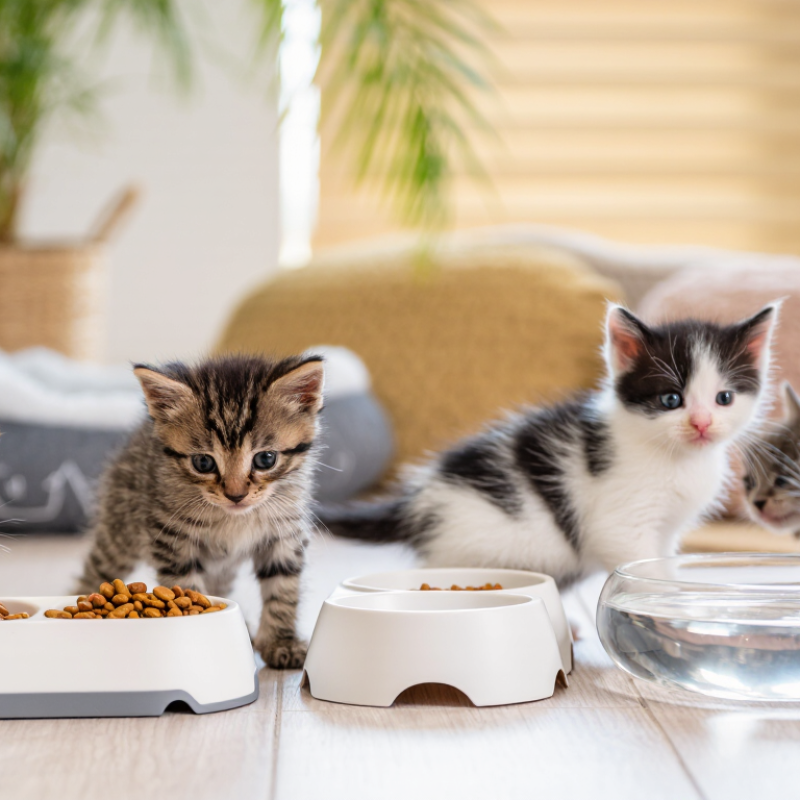
How to Set Feeding Times for Kittens Correctly?

Understanding Kitten Feeding Needs by Age and Development

A kitten’s feeding clock should follow development, not convenience alone. During the first four weeks, newborns need milk replacer under veterinary guidance, usually every two to four hours. Their stomachs are tiny, and missed feeds can quickly cause weakness. Never force a chilled kitten to feed. Warmth comes first.

At around four weeks, kittens can explore soft, complete growth food beside milk feeds. Offer small portions four times daily, using a shallow dish. By eight weeks, most healthy kittens can eat complete food independently.

The 2021 AAHA/AAFP Feline Life Stage Guidelines classify this period as rapid growth, when careful nutrition supports bones, muscles, and immunity. The FEDIAF Nutritional Guidelines for Cats and Dogs also provide separate nutrient targets for growth, reflecting kittens’ higher developmental demands.

“More food” is not always better.

From three to six months, four measured meals often work well. After six months, many kittens manage three meals daily, though active individuals may need adjusted portions. The National Research Council’s Nutrient Requirements of Dogs and Cats emphasizes that energy needs vary with body size, activity, and growth rate.

Weigh a kitten weekly, check body condition, and adjust gradually. A hungry-looking kitten may need play, not extra calories.

I have seen feeding plans fail because portions were guessed. A kitchen scale is less charming, but more reliable.

Persistent diarrhea, vomiting, poor growth, or sudden appetite changes require veterinary assessment.

Choosing Appropriate Feeding Times and Daily Meal Frequency

How to Set Feeding Times for Kittens Correctly?

Choosing Appropriate Feeding Times and Daily Meal Frequency

Kittens need small, regular meals because their stomachs are tiny and growth is rapid. From weaning to about three months, offer four meals daily, spaced roughly four to five hours apart. At three to six months, three meals usually work well. After six months, many kittens can move to two meals, although active or underweight kittens may need more frequent portions.

Set meals around a steady household routine. Breakfast at 7 a.m., lunch at noon, and dinner at 6 p.m. can provide clear structure. Measure the daily food amount, then divide it between meals. Use age and weight guidance as a starting point. A veterinarian should assess poor growth, constant hunger, vomiting, or diarrhea. Fresh water should always remain available.

Tips: Weigh your kitten weekly with a small scale. Adjust portions slowly, not suddenly. Watch the ribs, energy, stool, and appetite together. It is easy to underestimate changing needs. A portion that worked last month may now be insufficient. Keep a feeding log for two weeks. It can reveal missed meals or oversized servings. Avoid leaving wet food out for long periods, especially in warm rooms.

How to Set Feeding Times for Kittens Correctly?

Choosing Appropriate Feeding Times and Daily Meal Frequency

Daily feeding frequency depends on a kitten’s age and development. Newborn kittens usually need very small milk-replacer feedings every 2–4 hours, while weaned kittens can gradually move to fewer, scheduled meals. From around 6 months, many kittens can follow two measured meals per day. These are general starting points; portion size, health, and veterinary advice should also be considered.

Creating a Consistent Feeding Schedule for Kittens

A consistent feeding schedule helps kittens feel secure and supports steady growth. Feed kittens under four months three or four measured meals daily. From four to six months, offer three meals. After six months, many kittens can move to two meals, if their weight and appetite remain healthy. Keep each meal at a similar time, such as 7 a.m., noon, 5 p.m., and 10 p.m.

Small portions work better than one large bowl. Kittens have limited stomach capacity and high energy needs. The National Research Council’s Nutrient Requirements of Dogs and Cats reports that growing kittens need nutrient-dense food and carefully balanced nutrients. Merck Veterinary Manual notes that energy needs may reach about 2.5 times adult maintenance around ten weeks of age, then gradually decline. Portion sizes must still follow the kitten’s growth, body condition, and veterinary advice.

Use a kitchen scale when possible. Record weekly weight, meal amounts, stool quality, and unusual hunger. Fresh water should remain available near the feeding area. Avoid changing meal times suddenly; adjust them by 15 to 30 minutes over several days. A schedule is not a cage. Some kittens need an extra small meal during rapid growth, while others gain weight too quickly. I would review the plan after each veterinary check, because a neat timetable can still be wrong for one kitten.

Adjusting Portions and Timing as Kittens Grow

Kittens need portions that change with growth, not a permanent feeding schedule. The National Research Council’s Nutrient Requirements of Dogs and Cats explains that growing cats need nutrient-dense food to support tissue development. Their energy needs also vary with age, body size, activity, and health. A tiny kitten may need three or four measured meals daily, while many kittens can move toward two meals after six months. Ask a veterinarian before making major changes.

Measure each portion in grams. Do not rely only on the bowl’s appearance. FEDIAF’s 2024 nutritional guidelines emphasize life-stage needs and recommend adjusting intake according to body condition and growth. Weigh your kitten weekly, using the same scale and time of day. If ribs become difficult to feel, reduce the daily amount slightly. If the kitten looks thin, remains unusually hungry, or gains weight slowly, increase portions only with professional advice. A 5–10% adjustment may be reasonable, but it is not a universal rule.

Tips: Divide the daily allowance before serving. Keep fresh water nearby. Record meals, weight, stool quality, and energy. Those notes help reveal patterns. I sometimes see owners change food and timing together, then struggle to identify the cause of diarrhea or poor appetite. Change one factor at a time, and allow several days for observation. Merck Veterinary Manual also advises veterinary assessment when vomiting, persistent diarrhea, lethargy, or sudden appetite changes appear.

How to Set Feeding Times for Kittens Correctly? - Adjusting Portions and Timing as Kittens Grow

Kitten Age Meals per Day Suggested Feeding Times Food Type and Texture Daily Energy Starting Point Portion Guidance Adjustment Indicators
Birth–3 weeks 8–12 small feeds Approximately every 2–3 hours, including overnight Commercial kitten milk replacer prepared according to its label. Do not use cow’s milk. Follow the milk replacer’s weight-based instructions. Energy needs are highly individual at this age. Measure each feed carefully by body weight. Feed the kitten in a belly-down position and allow it to suckle slowly. A chilled, weak, dehydrated, bloated, or non-feeding kitten needs prompt veterinary attention.
3–4 weeks 6–8 feeds Every 3–4 hours Continue milk replacer while gradually introducing a shallow dish of smooth kitten food mixed with milk replacer. Continue using the milk replacer’s weight-based feeding guide. Offer tiny tastes after a milk feed. Replace only a small amount of milk with food at first. Increase solid food gradually if stools remain normal and the kitten maintains steady weight gain.
4–8 weeks 4–6 meals For example: 7:00, 11:00, 15:00, 19:00, and 22:00 Moist kitten food or softened kitten food formed into a soft gruel. Fresh water should be available. Use the food label’s kitten-calorie guide or calculate needs with a veterinarian. Start with small portions that can be eaten within about 20 minutes. Reduce milk replacer as solid-food intake increases. Loose stools, vomiting, or refusal to eat usually means the transition is too fast or medical advice is needed.
8–12 weeks 4 meals For example: 7:00, 12:00, 17:00, and 22:00 Complete and balanced kitten food, wet, dry, or a measured combination of both. Often about 175–240 kcal/day for kittens weighing approximately 1.0–1.5 kg, but individual needs vary. Divide the measured daily allowance into four equal portions. Adjust according to the food’s kcal per gram or kcal per can. Increase food modestly if the kitten is underweight or not gaining. Reduce excess calories if body condition is becoming round.
3–6 months 3 meals For example: 7:00, 14:00, and 21:00 Complete and balanced kitten food. Keep treats below 10% of daily calories. Often about 190–320 kcal/day for kittens weighing approximately 1.5–3.0 kg, depending on growth and activity. Divide the daily allowance into three measured portions. Weigh dry food when possible for greater accuracy. Review portions every 1–2 weeks during rapid growth, especially after a noticeable weight change.
6–9 months 2–3 meals For example: 7:00 and 19:00, with an optional small midday meal Continue complete kitten food unless a veterinarian recommends a different diet. Often about 250–390 kcal/day for kittens weighing approximately 2.5–4.0 kg. Use two equal meals or three smaller meals for kittens that beg, eat too quickly, or have sensitive digestion. Maintain a visible waist and gently palpable ribs. Do not restrict food aggressively during development.
9–12 months 2 meals For example: 7:00 and 19:00 Continue kitten food until the recommended transition time for the individual cat, commonly around 12 months. Often about 280–430 kcal/day for kittens weighing approximately 3.0–4.5 kg. Measure the full daily amount and divide it between morning and evening meals. Reduce portions if growth has slowed and body fat is increasing. Plan a gradual diet transition over 7–10 days when moving to adult food.
Simple Portion Calculation
Daily food amount in grams = Daily calorie target ÷ Food calories per gram

Example: If a kitten needs 220 kcal per day and the food provides 1.1 kcal per gram, the daily amount is approximately 200 g. Divide that amount among the planned meals.

For dry food, convert the label’s calories per kilogram to calories per gram by dividing by 1,000.
Daily Timing Template
Age Group Morning Midday Afternoon Evening Late Evening or Overnight
4–8 weeks Meal 1 Meal 2 Meal 3 Meal 4 Meal 5, if needed
8–12 weeks Meal 1 Meal 2 — Meal 3 Meal 4
3–6 months Meal 1 — Meal 2 Meal 3 —
6–12 months Meal 1 — Optional small meal Meal 2 —
Important feeding checks:
  • Use a complete and balanced food formulated for kittens rather than relying on treats or table food.
  • Provide clean drinking water at all times once the kitten is weaning.
  • Weigh the kitten regularly and adjust portions based on growth, body condition, stool quality, and activity.
  • Pregnant, orphaned, underweight, sick, or unusually large-breed kittens may need an individualized feeding plan from a veterinarian.

Monitoring Health and Refining the Feeding Routine

A kitten’s feeding schedule should respond to health, not only the clock. Very young kittens may need frequent meals, while older kittens can usually manage fewer, larger portions. A veterinarian should guide feeding for orphaned, underweight, or unwell kittens. Cow’s milk is not a safe substitute for appropriate kitten milk replacer.

Weigh the kitten regularly with a small digital scale, preferably at the same time each day. Record weight, meal size, appetite, stool, and energy levels. Healthy growth is often gradual, but each kitten develops differently. Watch the litter box. Persistent diarrhea, repeated vomiting, weakness, dehydration, or sudden refusal to eat requires prompt veterinary advice. Tiny kittens can deteriorate quickly.

A quiet eater may need a warmer room, a shallower dish, or smaller portions offered more often. Remove uneaten wet food after a short period, especially in warm conditions. If the kitten finishes every meal and remains lean, the portion may need adjustment. If the belly stays swollen or weight rises too quickly, reduce guesswork and seek professional guidance. Small changes matter. It is easy to overtrust a neat schedule, yet appetite can change during growth, stress, or recovery. Keep the routine consistent, but leave room to refine it.

FAQS

How often should kittens eat before they are three months old?

Offer four small, measured meals daily. Space them about four to five hours apart. Tiny stomachs fill quickly.

How many meals suit kittens from three to six months?

Three daily meals usually work well. Serve them at steady times, such as 7 a.m., noon, and 6 p.m.

Can a kitten eat only two meals after six months?

Many healthy kittens can move to two meals after six months. Active or underweight kittens may still need an extra portion.

How should daily food amounts be divided?

Measure the full daily amount first. Divide it between meals, rather than filling the bowl by eye.

Why should portions be weighed in grams?

Bowl appearance can mislead you. A kitchen scale gives clearer portions and helps track gradual changes.

How can owners tell whether portions need adjustment?

Weigh the kitten weekly. Check the ribs, energy, stool, appetite, and growth together. One sign alone may mislead you.

What should owners do when changing meal times?

Shift the schedule by 15 to 30 minutes over several days. Sudden changes may upset some kittens.

When should a veterinarian review the feeding plan?

Seek advice for poor growth, constant hunger, vomiting, diarrhea, lethargy, or sudden appetite changes. Do not guess for too long.

Should fresh water remain available?

Yes. Keep fresh water near the feeding area every day. Clean bowls matter too.

Is a strict feeding timetable always correct?

Not necessarily. A neat schedule can still suit one kitten badly. I would review it after weight checks and veterinary visits.

Conclusion

Learning how to set feeding times for kittens correctly begins with understanding their age, development, and nutritional needs. Very young kittens usually need small, frequent meals because their stomachs are limited and they grow quickly. As they mature, the number of daily meals can gradually decrease while portions increase appropriately. A consistent schedule helps kittens feel secure, supports healthy digestion, and makes it easier to notice changes in appetite or behavior.

Feeding portions and timing should be adjusted as a kitten gains weight, becomes more active, and transitions through different growth stages. Caregivers should monitor body condition, energy levels, stool quality, and overall development rather than relying on age alone. Fresh water should always be available, and meals should be served in a calm, clean area. If a kitten regularly refuses food, gains weight too quickly, appears unusually tired, or develops digestive problems, professional veterinary guidance can help refine the feeding routine safely.

Aria

Aria

Aria is a dedicated marketing professional with a deep passion for innovative strategies and a keen understanding of our company's product offerings. With a wealth of experience in the industry, Aria excels at crafting engaging content that highlights the unique features and benefits of our......