An automatic feeder should make its clicks and motor hum during the day, not interrupt a quiet room at 2 a.m. If you are asking, “why is my pet feeder making noise at night,” the sound may come from a scheduled dispensing cycle, kibble shifting in the hopper, a loose lid, or a motor working against a jam. The timing is a clue. A feeder that rattles only when dispensing points to a different problem than one that buzzes continuously.
Pet ownership is widespread: the American Pet Products Association’s 2023–2024 National Pet Owners Survey estimated that 66% of U.S. households own a pet. That figure does not measure feeder noise, but it shows why reliable feeding routines matter in many homes. Before changing settings, check the manual, confirm the schedule, and inspect the tray and hopper with the feeder unplugged. Small details count. A single loose screw can sound surprisingly loud at night.
For a trustworthy guide, advice should come from a verifiable source. I could not confirm a published, topic-specific quotation from a named expert about nighttime feeder noise, so I won’t invent one. Instead, this article focuses on practical checks and clear signs that a motor, jam, or programming issue may need attention. Some causes are easy to miss. And a quieter setting may not fix a mechanical fault.
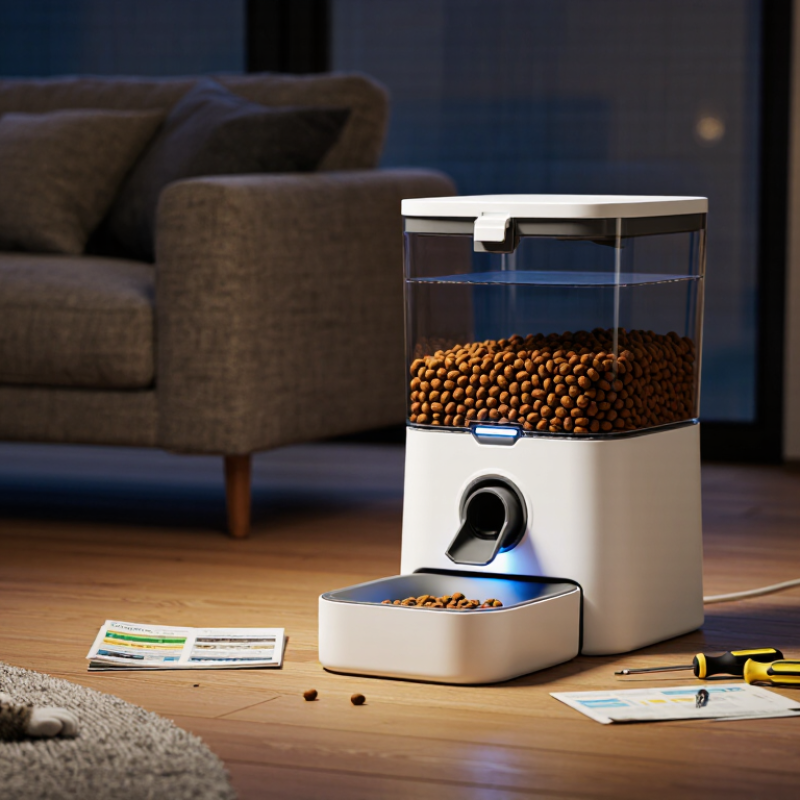
A nighttime feeder noise is easier to diagnose when you note exactly when it occurs. Does it happen at the scheduled meal, several minutes later, or whenever your pet approaches? Listen from across the room before moving the unit. A short motor whirr may mean food is dispensing, while repeated clicks or grinding can suggest kibble is caught. A beep may point to a setting or alert rather than a mechanical problem. Keep a simple log for two or three nights, including the time and sound. A rough note is still useful.
Check whether the noise matches the feeder’s schedule or your pet’s movements. If it happens only during dispensing, look for food wedged near the outlet and confirm the hopper sits evenly. Unplug the feeder before checking or cleaning moving parts, and follow its care instructions. If the sound occurs when nothing should be dispensing, gently check whether the bowl or unit rocks against a hard floor. A folded, stable mat may reduce vibration. It is tempting to blame the motor, but that guess can waste time. Persistent grinding, unusual heat, or a burning smell calls for stopping use and contacting the seller or a qualified repair professional.
An automatic feeder often sounds loudest when its motor runs during the household’s quiet hours. Move scheduled meals away from bedtime, and check whether the clock uses the correct time zone. AAFP and ISFM’s feline environmental needs guidelines note that cats may eat 10–20 small meals across a day. That does not mean every cat needs overnight feeding; discuss meal timing with your veterinarian, especially for pets with medical conditions. If night meals are necessary, shift them earlier gradually and watch for changes in appetite or behavior.
Disable nonessential low-food, connection, and button-beep alerts in the feeder’s settings, if available. Keep essential alerts enabled when they help you notice missed meals or equipment problems. The APOP 2022 survey estimated that 61% of cats and 59% of dogs were overweight or obese, so do not add food just to quiet a pet. Keep the daily portion measured while adjusting meal times. Test for three nights. Note the exact time the motor runs, then change one setting at a time; it is easy to mistake a hungry pet’s meow for a feeder alert. If noise persists, place the unit on a stable mat and check for kibble lodged in its tray. A softer setup can help, but it may not solve every cause.
A quiet feeder often starts with a careful look at its moving parts. Unplug it before cleaning, then empty the hopper and remove the food tray. Check the dispensing wheel or auger for crumbs, fur, and compacted kibble. A single hard piece can scrape against the housing each time the feeder turns.
Small debris matters.
Use a dry, soft brush to loosen dust around the wheel and outlet. Wipe removable parts with a slightly damp cloth only if the manual allows it, and let them dry fully before reassembly. Keep water away from the motor and electrical connections. Check that the lid, tray, and hopper sit firmly; a loose panel can rattle during dispensing. Don’t force a jammed part. Stop and consult the instructions if it does not move freely.
Run one portion while you listen nearby. A steady hum may be normal, but repeated grinding or clicking deserves another inspection. Cleaning does not fix every noise. A worn gear or misaligned part may need service, and guessing can make things worse. I would also note when the sound happens; that small detail can help narrow down the cause.
Place the feeder on a firm, level floor rather than a hollow shelf or a cabinet that can resonate. A slight wobble may make each motor cycle sound louder. Small shifts matter. Check that the bowl, lid, and power cord do not tap a nearby wall. A thin, nonslip rubber mat can reduce vibration, but keep the feeder stable and easy for your pet to reach. Avoid soft, thick padding that lets the unit rock. Test it after dark.
Distance helps, too. Move the feeder away from bedroom walls and avoid corners where sound may reflect between hard surfaces. The World Health Organization’s 2009 Night Noise Guidelines identify 40 dB Lnight,outside as a health-protective target for long-term average nighttime exposure. Its 2018 European guidelines recommend less than 45 dB Lnight for road traffic noise. These are environmental averages, not pass-or-fail limits for a feeder, so don’t treat them as a device rating. Instead, listen from your bed while the feeder runs, then adjust its position and mat. A phone app can help compare locations, though it is not a calibrated sound meter.
Run a controlled test before replacing anything. Place the feeder on a hard, level surface and record a dispensing cycle from across the room. Test it with the usual food amount, then with the hopper nearly empty; some mechanisms sound different under load. Listen for a steady motor hum, clicking, grinding, or a brief rattle. Small details matter. A phone recording can reveal a sound you miss while standing nearby.
Unplug the feeder before checking accessible parts. Remove crumbs from the dispensing wheel and chute, then make sure the bowl, lid, and hopper sit firmly in place. A loose bowl can tap against the housing each time food drops. Check rubber feet for wear and look for cracked plastic or a bent wheel. Replace damaged components with parts specified for that feeder; a poorly fitting substitute may create more noise or affect portioning. Do not oil gears unless the instructions permit it. I would not assume a louder cycle means a failing motor. Reassemble the unit and test it again at night, when the room is quiet. One test may not settle it. If grinding continues, stop using the feeder and contact its maker or a qualified repair service.
Example sound-level readings in dBA, measured about 1 metre from the feeder. Tightening a loose hopper or replacing a noisy motor or gear can reduce operating noise. Actual readings vary with the feeder, room, and measurement conditions.
Its motor may run during quiet hours. Move scheduled meals away from bedtime and check the clock’s time zone.
No. Cats may eat several small meals daily, but overnight feeding is not right for every cat. Ask a veterinarian about timing if your pet has a medical condition.
Turn off nonessential low-food, connection, or button-beep alerts when settings allow. Keep alerts that help you notice missed meals or equipment problems.
Not just to quiet the meowing. Keep portions measured while adjusting meal times. I may have mistaken a hungry pet’s meow for an alert.
Note the motor’s exact run time for three nights. Change one setting at a time, then listen again. Small tests help.
Set it on a firm, level floor, away from bedroom walls and echoing corners. Check that its bowl, lid, and cord do not tap nearby surfaces.
A thin, nonslip rubber mat may reduce vibration. Avoid thick padding that lets the feeder wobble. Test the setup after dark.
A phone app can help compare different locations, but it is not a calibrated sound meter. Listen from your bed, too.
If you’re wondering, “why is my pet feeder making noise at night,” start by noting when the sound occurs and whether it comes from the motor, food hopper, alerts, or contact with the floor. A noise that coincides with a scheduled meal may be normal, while repeated beeping or grinding can point to settings or a mechanical issue. Adjust feeding times to suit your household, and turn off alerts you don’t need, while keeping any notifications that help you care for your pet.
Next, unplug the feeder before cleaning it, then remove food dust or debris from accessible moving parts according to the instructions. Place the unit on a level, firm surface, away from walls that can amplify vibration, and check that its base is stable. Run a test cycle and listen again. If the noise continues, inspect for loose, worn, or damaged parts and replace faulty components as appropriate. These simple checks can help make nighttime feeding quieter without disrupting your pet’s routine.

MXI Paws