An automatic feeder can bring structure to a busy household, but pets rarely trust a new machine right away. Its motor may whirr, the lid may click, and food can appear without a familiar hand nearby. Learning how to train pets to use automatic feeder means making those changes feel safe, not simply setting a timer and walking away. Start with the feeder turned off and place a few familiar treats near it. Let your pet investigate at their own pace. No pressure.
Once your pet approaches calmly, place a small portion of their usual food in the bowl. Gradually introduce the feeder’s sounds and scheduled dispensing, pairing each step with praise or a meal they already enjoy. Keep the device in a quiet, accessible spot, away from water bowls and busy walkways. For cats or dogs sharing a home, watch whether one pet blocks another from reaching the food. That detail is easy to miss.
Use the feeder to support a routine, not to replace observation. Check that portions match your pet’s feeding plan, food stays fresh, and the dispenser works reliably. A camera or brief daily check can reveal skipped meals, nervous behavior, or competition around the bowl. If your pet refuses food, becomes distressed, or has a medical diet, ask your veterinarian for guidance before changing the routine. Progress may be uneven. That is normal, and it is worth adjusting the plan rather than forcing a quick result.
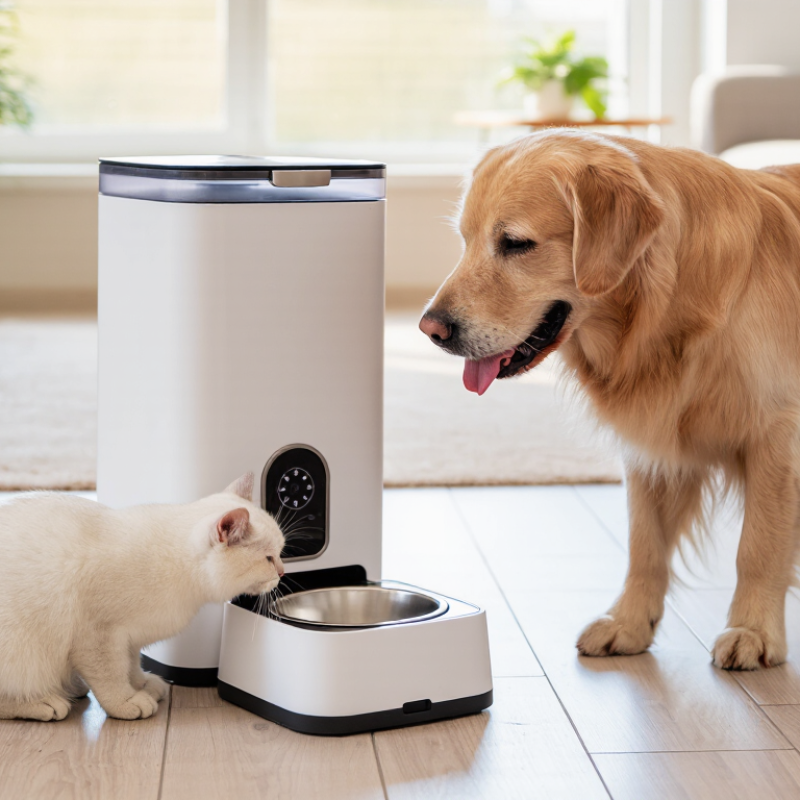
Before introducing an automatic feeder, observe your pet’s normal meals for several days. Note when they approach the bowl, how quickly they eat, and whether they leave food behind. A steady routine helps, but readiness also depends on comfort with change. Some pets startle at a motor’s click or a moving lid. Others may paw at equipment or eat too quickly. Go slowly. If your pet has a medical condition, needs carefully measured meals, or shows sudden appetite changes, ask a veterinarian before changing the routine.
Keep familiar meal times and portions while your pet gets used to the feeder. Check that the food type works with its dispensing mechanism, and watch for missed meals or repeated attempts to reach the food. In homes with multiple pets, confirm each animal can access the right portion. One easy-to-miss detail is noise: a feeder that seems quiet to you may worry a cautious pet. Readiness is not always obvious, so adjust based on what you observe.
Tips: Place the feeder beside the usual bowl at first. Let your pet inspect it while it is switched off. Try one meal under supervision, then check the portion and your pet’s response. Keep notes. Small steps matter.
| Assessment area | What to observe | Signs your pet may be ready | Adjustment before training |
|---|---|---|---|
| Current meal schedule | Record meal times and portions for several days, including treats and food given by other household members. | Meals follow a reasonably consistent schedule, and daily food intake can be measured. | Agree on a household feeding plan and measure the pet’s full daily ration before introducing the feeder. |
| Food type and portion size | Check whether the pet eats dry food, wet food, or a veterinarian-directed diet, and note the usual portion size. | The feeder is suitable for the food type, and its portion settings can dispense an amount close to the planned meal. | Check the device instructions and test several portions with the pet’s regular food. Do not assume a setting equals a particular weight without verifying it. |
| Comfort around new objects | Notice whether the pet approaches unfamiliar household items or avoids them. | The pet can investigate the feeder while it is switched off and does not show sustained fear. | Place the feeder near the usual feeding area without requiring the pet to approach. Let the pet explore at its own pace. |
| Response to sounds and movement | Observe reactions to household noises and to the feeder’s dispensing sound, if it can be tested safely. | The pet remains relaxed or returns to normal behavior shortly after hearing the sound. | Start with the feeder switched off, then introduce a small test dispense while the pet is at a comfortable distance. |
| Eating behavior | Note whether the pet eats calmly, guards food, eats very quickly, or needs to be encouraged to eat. | The pet can eat without distress and can access the feeding area safely. | For food guarding, competition between pets, or persistent reluctance to eat, plan separate feeding arrangements and seek veterinary guidance when needed. |
| Household feeding routine | Check who feeds the pet and whether meal times or portions vary from day to day. | Everyone involved can follow the same schedule and avoid adding unplanned meals. | Keep a shared feeding record during the transition so scheduled feeder portions are not accidentally duplicated. |
| Health and special needs | Consider the pet’s age, medical conditions, prescribed diet, and any need for medication with meals. | The feeding plan is consistent with the pet’s individual care requirements. | Ask a veterinarian before changing meal timing or portions if the pet has a medical condition, takes food-related medication, or has a prescribed feeding plan. |
| Readiness decision | Review the observations above and identify any unresolved concerns. | The pet is comfortable near the feeder, the food and portions are suitable, and the household can maintain the routine. | If the pet is fearful, misses meals, or has a health-related feeding requirement, address that concern before relying on the feeder. |
Use the feeder as a gradual transition, not an abrupt replacement for supervision. Check that food is dispensed correctly and that your pet continues to eat normally.
Observe meals for several days. Note when your pet approaches, how quickly they eat, and whether food remains. Some pets need more time.
Place it beside the usual bowl while switched off. Let your pet inspect it, then offer a few pieces by hand. Stay nearby.
Pause if your pet backs away. Try again later in a quiet room, and watch their response. Don’t rush it.
Weigh a test portion on a kitchen scale. Compare it with the feeder’s setting, since a “cup” may not match your pet’s needs.
No. Check that the food suits the dispensing mechanism. Large kibble pieces may jam some feeders, and wet food needs a model designed to keep it fresh.
Choose a time close to your pet’s usual mealtime. Keep other meals familiar, then shift the schedule gradually once your pet eats comfortably.
Check that food lands in the bowl and the portion looks right. Notice missed meals, food left behind, startling sounds, or repeated attempts to reach food.
Separate feeding stations may help prevent food stealing. For medical conditions, special feeding instructions, or sudden appetite changes, ask a veterinarian before changing the routine.
Training a pet to use an automatic feeder works best when the change is gradual and suited to the animal’s habits. Begin by considering your pet’s age, temperament, eating style, and current meal routine. Choose a feeder that fits the pet’s needs, then set it up in a quiet, familiar place. Keep the usual food and meal schedule at first so the new device does not make feeding feel unfamiliar.
To teach your pet how to train pets to use automatic feeder, place familiar meals near or inside the feeder while continuing to supervise and provide reassurance. Once your pet is comfortable approaching it, introduce scheduled dispensing in small steps. Watch how your pet responds, check that meals are being eaten as expected, and adjust the schedule or setup if needed. Patience and consistency help build a positive association and make the feeder a comfortable part of the daily routine.

 MXI Paws