A new automatic feeder can look harmless to us: a plastic bowl, a small screen, and a motor that clicks at breakfast. To a cat, it may be a strange object that suddenly moves, hums, or releases food without warning. If you are wondering, “why is my cat afraid of new feeding machines,” the fear may come from sound, motion, unfamiliar smells, or a disrupted routine. Some cats approach slowly. Others retreat beneath a chair and refuse even a favorite treat. That reaction is worth taking seriously.
Veterinary behaviorist Dr. Tony Buffington is often credited with the reminder, “Cats are not small dogs.” The point matters here: cats can respond strongly to changes in their surroundings, and one feeding device will not suit every temperament. Let the feeder sit unplugged near the usual bowl, then introduce its sound and movement gradually. Keep familiar dishes and mealtimes available while your cat investigates. A few cautious sniffs are progress. A skipped meal is not a training milestone; it is a reason to pause and reassess. I should be clear: fear can have several causes, and an introduction plan cannot diagnose pain or illness. If your cat stops eating or seems persistently distressed, contact a veterinarian. The feeder may be convenient, but your cat’s comfort comes first.
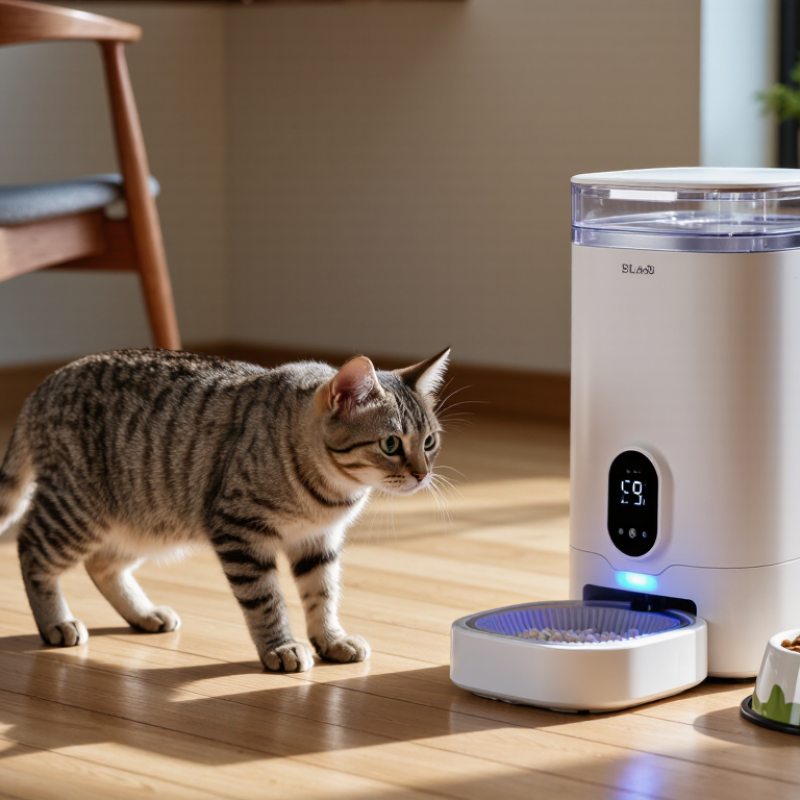
A new automatic feeder changes more than the bowl. Your cat may notice a motor’s low buzz, a flashing display, or the sudden clatter of kibble. The old routine also carried familiar cues: your footsteps, a cupboard opening, and food arriving from your hand. The machine changes several cues at once. I sometimes assume a cat is simply being stubborn; that may miss how strange the new sounds feel from floor level.
The American Pet Products Association’s 2023–2024 National Pet Owners Survey estimated that 46.5 million U.S. households had cats. That figure doesn’t explain feeder fear, but it shows how many homes rely on everyday feeding routines. AAFP and ISFM feline environmental-needs guidance stresses safe spaces, accessible resources, and positive, predictable interactions. Try placing the feeder beside the usual bowl while it is switched off. Let your cat investigate without pressure, then introduce its movement and sound gradually. Keep the familiar bowl available during the change. It may take longer than expected. If your cat stops eating or seems distressed, ask a veterinarian for guidance rather than assuming the feeder is the only cause.
A new automatic feeder can unsettle a cat because it changes more than the bowl. Cats often rely on familiar sounds, smells, and feeding routines. The motor may click or hum, then release kibble with a sudden rattle. To a cautious cat, that noise can feel unpredictable. Some feeders also shift or dispense food while the cat is nearby, causing a startle. Smell matters, too. New plastic, cleaning residue, or food stored differently can make a familiar meal seem strange. Even small changes count.
Placement and timing can add to the worry. A feeder near a busy doorway may leave a cat feeling exposed while eating. If it replaces a bowl in a quiet corner, the new location may seem less safe. A changed schedule can also confuse a cat that expects food at a familiar hour. It is tempting to call this stubbornness, but that label may miss the real cause.
Fear is information, not misbehavior.
Watch for crouching, flattened ears, or approaching only after the feeder stops moving. If a cat keeps avoiding food or eats less, a veterinarian can help check for other causes, including pain or illness.
Why Is My Cat Afraid of a New Automatic Feeder?
Signs of Stress During Feeder Introduction
A frightened cat may freeze when the feeder motor starts, crouch with flattened ears, or retreat under furniture. Some cats approach, then startle at the food dropping into the bowl. Watch for reduced eating, hiding, or avoiding the feeding area. These changes matter. A feeder can seem harmless to us; that assumption is not always fair. If your cat stops eating or seems unwell, contact a veterinarian rather than assuming the feeder is the only cause.
The 2022 AAFP/ISFM Environmental Needs Guidelines describe five pillars of feline wellbeing, including safe places, separated resources, and positive human interaction. A sudden new sound or blocked route to food may disrupt that sense of safety. Notice when your cat reacts: is it the motor, the moving lid, or the bowl’s location? That detail can guide a gentler introduction, though observations at home cannot diagnose illness.
Tips: Put the feeder beside the familiar bowl while it is switched off. Let your cat investigate at its own pace, then try short, supervised runs with a familiar meal. Keep the old feeding option available during the change. If stress continues, step back; slower may be better.
Signs of Stress During Feeder Introduction
This is an example transition plan, not a fixed rule. Hiding, avoiding the feeding area, eating less, or startling at the feeder’s sound can signal stress. Keep the familiar feeding routine available and move forward gradually; pause or return to an earlier stage if your cat seems uncomfortable. Contact a veterinarian if your cat stops eating or you are concerned about their health.
A new automatic feeder may look harmless to you, but your cat may notice its smell, shape, or sudden motor noise. Keep the familiar bowl in its usual place while the feeder sits nearby, switched off. Let your cat investigate at its own pace. A few curious sniffs are progress. Don’t move the old bowl away too soon; that can make mealtimes feel uncertain.
Once the feeder seems familiar, place a small amount of your cat’s usual food in it while it remains off. Later, run one feeding cycle while you stay nearby, then offer food as usual. If the sound causes your cat to retreat, pause and try again another day from a greater distance. Gradual steps are less dramatic, but often more reassuring. It’s easy to rush because the device seems simple. Your cat may need longer than expected. Keep meals regular, and watch whether your cat is eating normally. If fear continues or appetite changes, ask a veterinarian for advice.
Tips: Use familiar food, keep the feeder stable, and avoid forcing your cat to approach. A quiet room can help. Make changes slowly, even if progress seems uneven.
A frightened cat may crouch beside a new feeder, flatten its ears, or bolt when the motor starts. A brief reaction can come from unfamiliar sounds or smells. Give your cat space and offer food in a quiet, familiar bowl nearby. Fear alone is not a diagnosis. Still, a sudden change in behavior deserves attention, especially if your cat seemed comfortable before.
Contact your veterinarian if fear continues despite removing the feeder, or appears alongside reduced appetite, hiding, unusual aggression, drooling, or changes in drinking or litter-box habits. Pain and illness can alter behavior, so avoid assuming the feeder is the whole story. Note when the reaction began, how much your cat eats, and any other changes. That detail helps. If your cat refuses food for about a day, call for advice sooner for a kitten or a cat with existing health problems. Seek urgent veterinary care for trouble breathing, collapse, repeated vomiting, or straining to urinate. Do not wait.
Tips: Turn the feeder off and let your cat inspect it while it is silent. Keep meals predictable, and never force your cat close. If you are unsure whether a symptom is serious, call your veterinary clinic; guessing can cost time.
It may click, hum, or rattle when food drops. New plastic smells and unfamiliar movement can also feel unsettling.
Your cat may freeze, crouch, flatten its ears, hide, or retreat when the motor starts. Some cats approach only after it stops. That detail matters.
Place it beside the familiar bowl while switched off. Let your cat sniff it freely, then try brief, supervised runs with a familiar meal. Give it time.
No. Keep the usual bowl available during the change, so your cat can still eat comfortably. Do not force it.
Choose a quiet, familiar spot with a clear path and room to eat. A busy doorway may make your cat feel exposed.
Yes. Cats may expect food at familiar times, so sudden schedule changes can add stress. Keep meals predictable where possible.
Seek advice if fear continues after the feeder is removed, or comes with reduced eating, hiding, unusual aggression, drooling, or changed drinking or litter-box habits. The feeder may not explain everything.
Get urgent help for trouble breathing, collapse, repeated vomiting, or straining to urinate. If your cat refuses food for about a day, call sooner for a kitten or a cat with existing health problems. I might misread a subtle sign, so ask if you are unsure.
A new automatic feeder can feel very different from a familiar feeding routine. Its shape, movement, sounds, or unexpected release of food may startle a cat, especially if the device appears suddenly or is placed in a busy area. If you’re wondering “why is my cat afraid of new feeding machines,” possible reasons include unfamiliar noises, changes to the feeding environment, or a previous frightening experience. Signs of stress may include hiding, approaching cautiously, refusing food, or avoiding the feeding area.
Help your cat adjust gradually. Place the feeder near the usual bowl while it is switched off, and let your cat investigate at its own pace. Offer food nearby, then gradually move meals to the feeder and introduce its sounds or dispensing function in small steps. Keep the routine calm and avoid forcing interaction. If your cat continues to refuse food, shows persistent distress, or develops other concerning changes, consult a veterinarian to rule out health problems and discuss support.
MXI Paws